Getting handed a stack of official-looking documents can be unsettling, especially if you were not expecting anything from a court. You may wonder whether you are being sued, If you have to appear in court, or If the papers mean someone has already won a case against you.
If you are searching what does being served papers mean, you are usually trying to understand what this legal notice means and what you should do next.
In the United States, being served generally means that legal documents have been formally delivered to you in a way recognized by the applicable rules. The documents might involve a lawsuit, subpoena, family-law matter, or another legal proceeding.
The important thing is not to focus only on the phrase “served papers.” Look at the actual documents. They can tell you what court is involved, who the parties are, why the case exists, and whether you have a deadline to respond.
Understanding that information early can help you avoid missing an important legal step.
⚡ Quick Answer
Being served papers means you have been formally notified about a legal proceeding involving you. The documents might include a summons, complaint, subpoena, petition, or court notice. Being served does not automatically mean you lost a case or are legally responsible for the claims; it means the legal process has formally notified you.
What Does Being Served Papers Mean Plainly?
Being served papers means that someone has formally delivered legal documents to you as required by the applicable law or court rules.
The formal process is commonly called service of process. Its purpose is to give a person notice that a legal proceeding concerns them and, where applicable, provide an opportunity to respond.
In a federal civil lawsuit, for example, Rule 4 of the Federal Rules of Civil Procedure addresses service of a summons and complaint. The summons identifies the court and parties and tells the defendant the time allowed to appear and defend.
The phrase “being served papers” does not describe only one kind of legal case.
You might be served because:
- Someone filed a civil lawsuit against you.
- Someone started a family-law proceeding.
- A court requires you to provide testimony.
- You are being asked to produce documents.
- You are involved in another legal proceeding.
This is why the first step is to identify exactly what documents you received.
A summons and complaint generally signal something different from a subpoena. A divorce petition serves a different purpose from a housing-court notice.
Being served also does not automatically mean that the court agrees with the person who filed the case.
For example, if a complaint says that you owe someone money, the complaint contains the other party’s allegations. It does not mean the court has already determined that you owe the money.
The legal process gives you notice and, depending on the proceeding, an opportunity to respond.
What Documents Might You Receive When You’re Served?
The documents you receive can tell you much more than the phrase “served papers.”
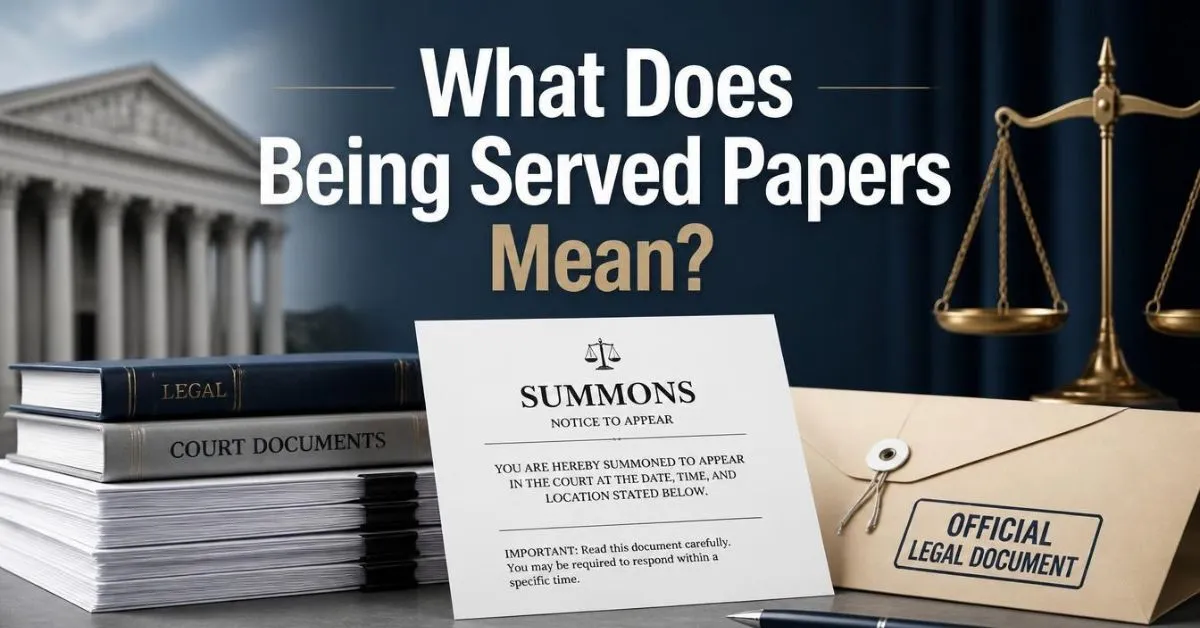
Summons
A summons is an official notice telling a defendant that a lawsuit has been filed and explaining the required response or appearance.
Under Federal Rule 4, a summons must contain information such as the court and parties, the time to appear and defend, and a warning about possible default if the defendant fails to respond.
Complaint
A complaint generally explains the claims made by the person or entity bringing a civil lawsuit.
It can identify:
- What the plaintiff alleges happened
- The legal claims being asserted
- What relief the plaintiff is requesting
Receiving a complaint does not mean every allegation in it has been proven.
Petition
A petition can begin certain types of legal proceedings, including some family-law and other court matters.
The terminology can vary depending on the state and type of case.
Subpoena
A subpoena can require a person to appear, testify, or provide documents or other information.
Someone receiving a subpoena is not necessarily being sued.
Court Notice or Order
You may also receive other court documents explaining a hearing, proceeding, deadline, or court requirement.
The document title and instructions should be reviewed carefully rather than assuming every packet of legal papers means the same thing.
A Simple Example Of Being Served Papers
Suppose a person files a civil lawsuit against you.
The lawsuit is filed in a court, and the required documents are prepared for service. In a federal civil case, a summons is generally served together with a copy of the complaint. Federal Rule 4 also specifies who may serve the documents and how service can be carried out.
A process server then delivers the documents to you.
Inside the packet, you may find:
- A summons
- A complaint
- The court’s name
- A case number
- The names of the parties
- Filing information
- Instructions about responding
- A deadline or hearing information
In that situation, being served papers means you have received formal notice of the lawsuit.
It does not mean the plaintiff automatically wins.
It also does not necessarily mean you must agree with the allegations.
Your next steps depend on the documents, the court, the type of case, and the applicable rules.
That is why simply throwing the papers away or assuming they are unimportant can create unnecessary legal problems.
Where You’ll Encounter Served Papers
Formal service can appear in many different areas of U.S. law.
Civil Lawsuits
A civil case might involve a dispute over money, property, contracts, injuries, or other legal claims.
A named defendant may receive a summons and complaint.
Family-Law Cases
Service can occur in matters involving divorce, custody, child support, or other family-law proceedings.
The exact procedure depends heavily on state law and the type of case.
Subpoenas
You may receive legal papers because you are a witness or have information or documents relevant to a proceeding.
Being served a subpoena does not automatically make you a defendant.
Housing and Eviction Cases
Landlord-tenant disputes may involve formal court documents notifying a person about a case or hearing.
The exact documents and response requirements vary by jurisdiction.
Other Legal Proceedings
There are many other situations in which formal legal documents may need to be served.
The safest approach is to identify the document rather than trying to determine the entire situation from the fact that someone delivered papers.
Why Being Served Papers Matters Legally
Being served matters because legal notice can start or affect important procedural deadlines.
A summons may tell a defendant when they need to appear or defend themselves. Federal Rule 4 specifically requires a summons to state the time within which the defendant must appear and defend.
That means one of the first things to look for is a deadline.
Do not assume that every person who gets served has the same amount of time.
The applicable deadline may depend on:
- The type of case
- The court
- The jurisdiction
- The document served
- The method of service
- Whether service was waived
- Other procedural rules
For example, Federal Rule 12 generally provides a 21-day period for a defendant to serve an answer after being served with the summons and complaint, subject to exceptions.
That does not mean every U.S. case gives you 21 days.
State courts can have different deadlines, and different proceedings may follow different rules.
So if your paperwork says you must respond by a particular date, do not replace that instruction with a generic deadline found online.
How Service of Process Is Typically Applied
Service of process is a formal legal procedure, not simply an informal way of giving someone information.
The exact method depends on the court and the type of proceeding.
In federal civil cases, Rule 4 provides different requirements for serving individuals, corporations, partnerships, government entities, and other parties.
Federal rules may allow service through methods such as personal delivery or methods permitted by applicable state law, depending on the circumstances.
A person who serves documents may be a professional process server or another person legally permitted to perform service. Federal Rule 4 generally allows a person who is at least 18 years old and is not a party to the lawsuit to serve a summons and complaint.
What If You Refuse the Papers?
Refusing to physically take a document does not necessarily make the legal matter disappear.
Whether service was legally completed depends on the circumstances and the rules that apply.
If you believe the person serving you did not follow the required procedure, that can be a legal issue worth discussing with an attorney.
Federal Rule 12 recognizes insufficient service of process as a possible defense in federal civil litigation, although procedural requirements determine how and when such defenses must be raised.
The important point is that “I didn’t accept the papers” is not automatically the same as “I was never legally served.”
What Should You Do After Being Served?
If you have just received legal papers, avoid making assumptions before reading them.
1. Read the entire packet
Do not stop at the first page.
Look for the court name, case number, document titles, parties, allegations, instructions, hearing dates, and response deadlines.
2. Identify what kind of document you received
Determine whether it is a:
- Summons
- Complaint
- Petition
- Subpoena
- Court order
- Hearing notice
- Other legal document
This can dramatically change what the papers mean.
3. Write down every important date
If the paperwork lists a response deadline or court hearing, record it immediately.
Do not rely only on memory.
4. Keep the original documents
Store the papers somewhere safe.
Make copies or secure electronic scans if appropriate, but keep the originals.
5. Check the court information
The court name and case number can help you identify the proceeding and locate official information.
Be careful with unofficial websites that claim to provide legal answers about your particular case.
6. Consider legal help
If you are named as a defendant or the documents could seriously affect your money, property, family, employment, or legal rights, consider speaking with a licensed attorney promptly.
If you cannot afford private counsel, look for legal-aid programs or court self-help resources that may be available in your jurisdiction.
Common Misunderstandings About Being Served
“Being served means I lost.”
Not necessarily.
Service is generally about formal notice. It does not itself decide who wins the case.
“Being served means I am guilty.”
Not necessarily.
Civil legal proceedings do not work the same way as a criminal conviction, and receiving legal documents does not itself establish liability.
“The papers must mean someone is suing me.”
Not always.
A subpoena or another legal document can involve someone without making them a defendant.
“If I refuse the papers, the case disappears.”
Usually, refusing to cooperate with service is not a reliable way to make a legal case disappear.
The validity of service depends on the applicable rules and circumstances.
“Every state uses the same service rules.”
No.
Federal courts follow federal rules, while state courts have their own laws and procedures. Some federal rules also incorporate state-law methods in particular circumstances.
“I can wait until I receive another letter.”
That can be risky.
If the documents already contain a response deadline or hearing date, waiting could cause you to miss an important procedural step.
Related Legal Terms You Should Know
Service of process
The formal procedure used to provide legally recognized notice of a proceeding.
Summons
A court document notifying a defendant about a lawsuit and the need to respond or defend.
Complaint
A pleading that sets out the claims made by a plaintiff in a civil lawsuit.
Plaintiff
The person or entity bringing a civil claim.
Defendant
The person or entity responding to a civil lawsuit.
Subpoena
A legal document that can require testimony, attendance, or production of documents.
Proof of service
Documentation showing how and when legal papers were served.
Waiver of service
An alternative procedure in which a defendant may waive formal service of a summons under applicable rules.
Default judgment
A judgment that may be entered when a party fails to respond or defend as required.
These terms are related, but they do not all describe the same thing. Identifying the exact document you received is often the fastest way to understand your position.
When To Talk To An Attorney
This article provides general information, not legal advice. For advice about your specific situation, deadlines, defenses, or rights, consult a licensed attorney in the relevant jurisdiction.
Consider getting legal help promptly if:
- You were named as a defendant.
- You received a summons and complaint.
- A response deadline is approaching.
- You have been given a court hearing date.
- You received a subpoena and do not understand your obligations.
- The case involves significant money or property.
- The matter involves divorce, custody, or support.
- You believe service was improper.
- You do not understand what the court documents require.
An attorney can review the actual documents rather than giving advice based only on the phrase “served papers.”
That distinction matters because two people can both say they were “served,” while their legal situations are completely different.
🎯 Practical Takeaway
Being served papers usually means you have received formal notice of a legal proceeding involving you. Do not assume that service means you have lost, but do take the documents seriously. Read the papers, identify the case and deadlines, keep everything you received, and consider speaking with a licensed attorney if the matter affects your rights or requires a response.
FAQs:
What does being served papers mean?
Being served papers means legal documents have been formally delivered to you under the rules that apply to the proceeding. The papers may concern a lawsuit, subpoena, family-law case, or another court matter. Service generally provides notice; it does not by itself mean the court has ruled against you.
Does being served papers mean someone is suing you?
Not necessarily. A summons and complaint usually indicate that you are being named as a defendant in a civil lawsuit, but other legal documents can also be served. For example, a subpoena may require you to provide testimony or documents without making you a defendant.
What happens after you are served papers?
Your next step depends on the documents and applicable court rules. Carefully identify the case, document type, response deadline, and hearing information. In federal civil cases, defendants generally have a specified period to respond, but state and case-specific rules can differ.
Can you ignore papers that have been served?
You generally should not ignore legal documents. If the papers require a response or appearance, failing to act can have legal consequences. Federal civil summonses warn defendants about possible default if they fail to appear and defend, although the exact consequences depend on the case and applicable rules.
Does refusing served papers stop the case?
Not necessarily. Refusing to physically accept documents does not automatically determine whether legal service was completed. Service requirements depend on the jurisdiction and circumstances. If you believe service was improper, an attorney can help you understand whether that issue matters in your case.
How long do you have to respond after being served?
There is no universal U.S. deadline. In federal civil cases, Rule 12 generally provides 21 days to serve an answer after service of the summons and complaint, subject to exceptions. State courts and other proceedings can use different deadlines, so the actual paperwork should be checked carefully.
Does being served papers mean you are in trouble?
Being served means the legal matter deserves attention, but it does not automatically establish wrongdoing or mean you will lose. The meaning depends on the documents. A lawsuit, subpoena, family-law petition, and court notice can each create different rights, duties, and deadlines.
Conclusion:
If you have been handed legal documents and are wondering what does being served papers mean, the key idea is formal legal notice. Someone is notifying you about a legal proceeding that may require you to respond, appear in court, provide information, or take another action.
The phrase itself does not tell you whether you are being sued or what the outcome will be. The documents do.
A summons and complaint can indicate that you are a defendant in a civil lawsuit, while a subpoena may involve you as a witness or another participant.
Do not assume that refusing the papers makes them meaningless, and do not assume that every U.S. case follows the same deadline.
Federal and state courts can have different procedures, and even cases in the same court can have different requirements.
The safest practical approach is simple: read everything, identify every deadline, keep the documents, and get qualified legal help when the situation is important or unclear.
Understanding what you received is the first step toward understanding what comes next.

I am Logan Reed, an author at Meaningary.com and an expert in meanings, slang, and everyday expressions. I specialize in explaining name meanings and language in a simple, clear, and reader friendly way.