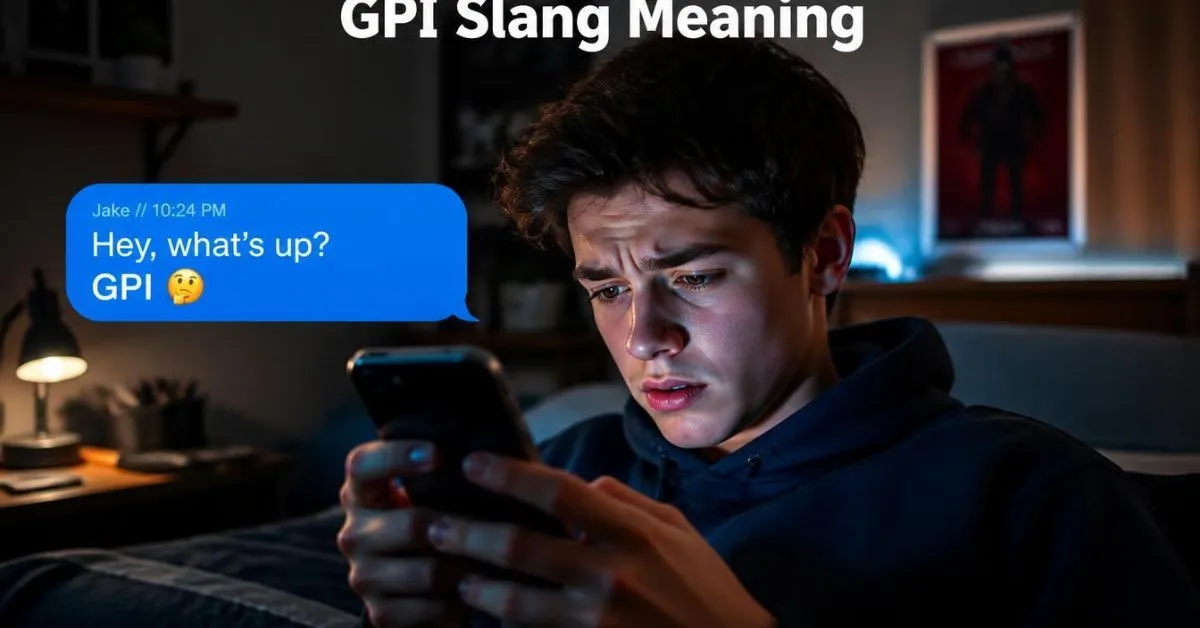
Have you ever seen someone reply “GPI” under a friend’s vacation photo, party post, or group chat message and wondered what those three letters meant? It can look like a random acronym if you have never seen Spanish internet slang before.
The phrase is especially interesting because the literal meaning sounds polite, but the way people use it is often the opposite. In casual online conversations, GPI slang meaning comes from the Spanish phrase “Gracias Por Invitar,” which means “Thanks for inviting me.” It is commonly used jokingly when someone was not invited to a plan, event, meal, trip, or gathering.
If you found GPI in a TikTok comment, Instagram story, WhatsApp chat, or text message, the surrounding conversation can help you understand the tone. Keep reading to see what GPI means, where it comes from, how people use it, and how you can reply naturally.
⚡ Quick Answer
GPI usually means “Gracias Por Invitar,” a Spanish phrase meaning “Thanks for inviting me.” Online, it is often used sarcastically when someone sees friends making plans or having fun without them. In simple English, GPI can mean “Invite me too!” or “Thanks for leaving me out!”
😂What GPI Means🌊
GPI is short for the Spanish phrase “Gracias Por Invitar.” A natural English translation is “Thanks for inviting me” or “Thanks for the invite.” Wiktionary lists GPI as Spanish internet slang and text messaging shorthand for gracias por invitar.
The interesting part is the tone.
People often write GPI when they were not actually invited. So instead of being a genuine thank-you, it works as a playful complaint.
For example:
Friend: “We went out for tacos last night 🌮”
You: “GPI 😂”
“Wow, thanks for inviting me… even though you didn’t!”
Mexican media sources describe this sarcastic use in situations involving parties, trips, meals, meetings, and other activities.
In English-speaking spaces, you may understand the intended meaning as:
- “Invite me next time.”
- “Why didn’t you invite me?”
- “I wanted to go too.”
- “Thanks for leaving me out.”
- “I see you went without me!”
The exact wording changes, but the social idea is usually the same:
the person wants to point out that they were left out.
😂 Where GPI Came From 😂
GPI comes from Spanish-language internet communication. The letters are taken from the first letters of Gracias Por Invitar.
- G = Gracias
- P = Por
- I = Invitar
The expression is particularly associated with Mexican online slang. A publication from the Universidad Autónoma de Coahuila describes gpi as a colloquial abbreviation used on social networks such as Facebook and WhatsApp, especially among young people, to jokingly say “thanks for inviting” when the writer was not invited.
Major Mexican media outlets have also explained GPI as an informal online abbreviation with this same sarcastic meaning.
The exact historical starting point is less certain. Some online sources make specific claims about where and when it began, but those claims are not consistently documented. So it is safer to describe GPI as Spanish-language internet slang associated strongly with Mexican online communication, rather than claim one confirmed inventor or exact starting date.
This also explains why an English-speaking reader may see GPI and have no idea what it means. It is not primarily an English abbreviation.
😂 Who Uses GPI & Where 😂
GPI is most useful in informal digital communication. It can appear in comments, private messages, group chats, and social media posts.
You might encounter it on:
- WhatsApp: A friend says the group went somewhere without you.
- Instagram: Someone posts pictures from a dinner you missed.
- TikTok: A creator shows a fun outing and someone comments “GPI.”
- Facebook: Friends share photos from a gathering.
- Text messages: Someone tells you about plans you were not included in.
A Mexican news outlet notes that GPI is not limited to one social platform and can appear across services such as WhatsApp, Facebook, Instagram, and TikTok.
The expression is generally casual. You would not normally use it in a formal business email, school paper, or professional document.
Who is likely to understand it?
Someone familiar with Spanish-speaking online culture may recognize GPI immediately. An English-only texter may not know it at all.
That is why context matters.
If your friend understands Spanish slang, “GPI 😂” may be instantly clear. If they do not, spelling out the meaning may be better.
😂 How to Use GPI Correctly 😂
The easiest way to use GPI is as a short reaction to plans, events, or activities where you wish you had been included.
Example 1: Dinner
Friend: “We all went to that new Italian restaurant last night.”
You: “GPI 😂”
Meaning:
“Thanks for inviting me!” but said sarcastically because you were not invited.
Example 2: Vacation
Friend: “Beach weekend was amazing! 🌊”
You: “GPI 😭”
Here, the message suggests:
“I wish I had been invited too.”
Example 3: Party
Friend: “Last night was so much fun!”
You: “GPI lol.”
The tone is playful and may mean:
“You guys went without me?”
Example 4: Future plans
Friend: “We’re going to the movies tonight.”
You: “GPI 👀”
Depending on the conversation, this can suggest:
“Can I come too?”
So GPI does not always refer to something that already happened. It can also be a playful way of signaling that you want an invitation.
😂 GPI In Different Contexts😂
The basic idea stays similar, but the tone can change.
With close friends
GPI is usually lighthearted.
If your friends post pictures from lunch, replying “GPI 😂” can simply be a funny way to say you would have joined them.
On social media
The phrase can work as a short comment under photos or videos.
For example:
“Road trip with the crew 🚗”
“GPI 😭”
The commenter is joking that they should have been part of the trip.
In a group chat
GPI can be more direct because everyone already understands the relationship.
If several friends are discussing a dinner you were not told about, “GPI” can call attention to your missing invitation without writing a long message.
Between people who do not know each other well
Be more careful.
Sarcasm does not always transfer well through text. Someone who does not know you might read GPI as genuine annoyance rather than a joke.
That is where an emoji or a clearer message can help.
😂 Related Slang & Abbreviations 😂
GPI belongs to the wider world of short internet expressions. Some related terms express inclusion, missing out, or reactions to social situations.
FOMO
Meaning: Fear of missing out, usually describing concern about missing an enjoyable event or experience.
POV
Meaning: Point of view, commonly used to introduce a perspective or imagined situation online.
LOL
Meaning: Laughing out loud, usually signaling amusement or a light tone.
OMG
Meaning: Oh my God, often used to show surprise, excitement, or shock.
NTP
Meaning: “No te preocupes,” a Spanish online abbreviation meaning “Don’t worry.”
NTC
Meaning: “No te creas,” commonly used to clarify that something was a joke or not meant literally.
GPI is different from these because its meaning comes from Spanish words, while several familiar internet abbreviations come from English phrases.
😂 Is GPI Still Used or Dated? 😂
GPI remains recognizable in Spanish-language internet culture, particularly in Mexican social-media contexts. It has also appeared across platforms such as Instagram, Facebook, WhatsApp, and TikTok.
However, that does not mean every English-speaking internet user will know it.
GPI is more niche than extremely common abbreviations such as LOL or OMG. Its recognition depends heavily on language, region, online community, and personal exposure to Spanish-language slang.
You may therefore see two very different reactions:
Spanish-speaking friend: “GPI 😂”
Someone unfamiliar with Spanish slang: “What does GPI mean?”
Neither reaction is unusual.
If you are writing for a broad English speaking audience, using the full phrase or explaining GPI once can prevent confusion.
😂 What Not to Confuse GPI With 😂
GPI can have completely different meanings outside slang.
For example, GPI can refer to technical or professional terms in other fields. Wiktionary lists meanings connected with economics, medicine, and pathology in English.
So context matters.
If you see:
“GPI 😂” under vacation pictures
the Spanish slang meaning is a strong fit.
But if you see:
“GPI” in a scientific or business document
do not automatically assume it means “Gracias Por Invitar.”
The same three letters can represent different things in different settings. The surrounding words, topic, and audience usually tell you which meaning applies.
🎯 Practical Takeaway
If you see GPI in a casual social-media comment or text, especially in a Spanish-speaking context, it usually means “Gracias Por Invitar” “Thanks for inviting me.” It is often playful or sarcastic because the person was not actually invited. If you are unsure about the tone, look at what happened before the message. A party photo, trip, dinner, or group activity makes the slang meaning much easier to understand.
FAQs:
What does GPI mean in slang?
GPI usually means “Gracias Por Invitar,” which translates to “Thanks for inviting me.” In online slang, it is commonly used sarcastically when someone was not invited to an activity. The person may be jokingly asking why they were left out or signaling that they would have liked to join.
What does GPI mean in text messages?
In text messages, GPI usually refers to the Spanish phrase “Gracias Por Invitar.” A person may send it after learning that friends went somewhere without them. Depending on the relationship, it can sound funny, teasing, mildly annoyed, or simply like a playful request to be included next time.
What does GPI mean on TikTok?
On TikTok, GPI can appear in comments under videos showing parties, trips, meals, concerts, or other activities. It usually carries the idea of “Thanks for inviting me” in a joking or sarcastic way. The commenter is often pointing out that they were not included.
Is GPI Spanish slang?
Yes. GPI is associated with Spanish-language internet slang and comes from “Gracias Por Invitar.” The phrase is especially documented in Mexican online communication. It is an informal abbreviation rather than a standard English expression.
Is GPI rude?
Usually, GPI is not meant as a serious insult. It is often playful teasing between friends. However, tone depends on the relationship and situation. If someone is genuinely upset about being excluded, the same three letters can sound more pointed. An emoji or surrounding message can make the intended tone clearer.
What is the English meaning of GPI?
The closest natural English meaning is “Thanks for inviting me.” In the slang context, it may really mean “Why didn’t you invite me?”, “Invite me next time,” or “I wanted to come too.” The sarcastic meaning is important because the person often was not invited at all.
😂 Conclusion:
Understanding GPI becomes much easier once you know its Spanish origin. GPI stands for “Gracias Por Invitar,” meaning “Thanks for inviting me,” but online it is commonly used with a playful or sarcastic twist when someone was not included in a plan.You may see it beneath vacation photos, party pictures, restaurant posts, group chat messages, or videos about fun activities. The exact tone depends on the people involved, but the basic idea is usually simple: “I see what you did, and I wish you had invited me.”
If you encounter GPI outside a social or texting context, pause before assuming the slang meaning. The abbreviation can represent unrelated technical or professional terms.
In casual Spanish-language communication, though, the invitationrelated meaning is the one to keep in mind.
A few letters can carry a whole joke. With GPI, the joke is often that the “thanks” comes after the invitation never happened.

I am Alex Carter, an author at Meaningary.com and an expert in meanings, slang, and everyday expressions. I specialize in explaining name meanings and language in a simple, clear, and reader friendly way.