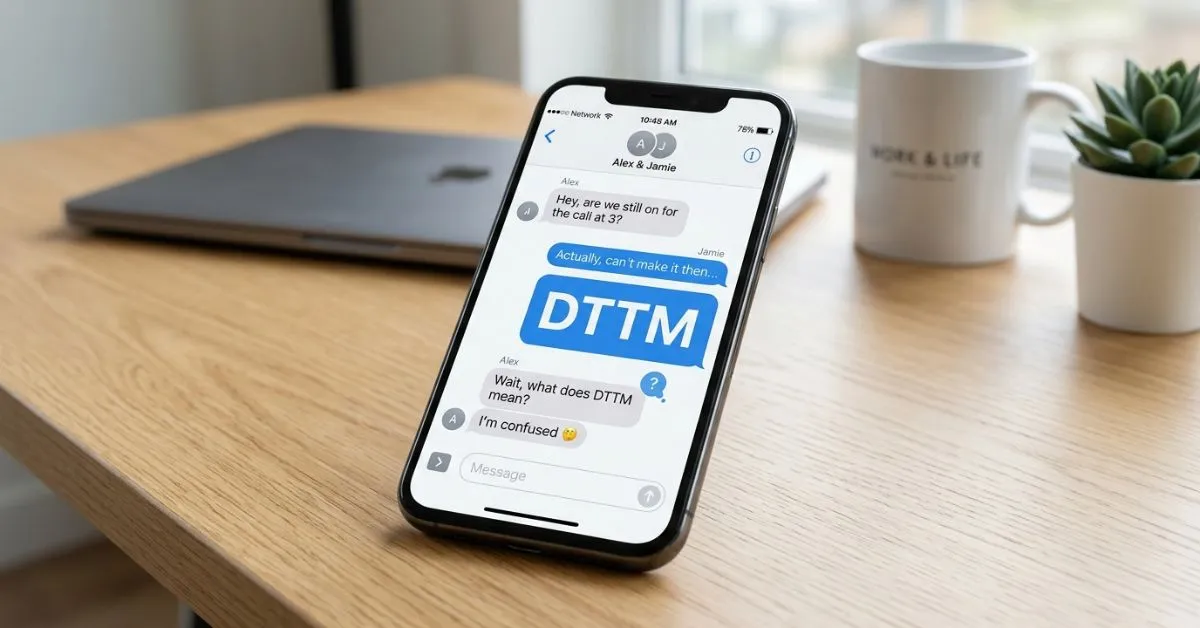
Have you ever received a text with “DTTM” and paused because you had no idea what the sender meant? I have seen how confusing short texting abbreviations can be, especially when they appear without any other clues. Unlike familiar terms such as “LOL” or “BTW,” some abbreviations depend heavily on the conversation around them.
If you are searching what does dttm mean in texting, you probably want a quick answer, but you may also want to know whether the phrase is friendly, serious, romantic, or something else. The good news is that DTTM can be understood by looking at the words around it and the relationship between the people chatting.
This guide explains the likely meaning of DTTM, how it can be used, what context changes its interpretation, and how you can respond without making the conversation awkward.
⚡ Quick Answer
DTTM usually means “Don’t Talk to Me” in texting. It can sound serious, annoyed, playful, or temporary depending on the conversation. Because abbreviations can have different meanings in different groups, check the surrounding messages before assuming the sender is genuinely upset or wants no contact.
What Does DTTM Mean in a Text?
In texting, DTTM most commonly means “Don’t Talk to Me.”
It is a shortened phrase made from the first letters of the words:
- D = Don’t
- T = Talk
- T = To
- M = Me
The exact tone depends on the situation.
For example:
“I’m really annoyed right now. DTTM.”
Here, DTTM is likely a direct request for space.
But consider:
“DTTM 😂 I’m trying to finish this movie!”
That could be playful rather than hostile.
This is why reading only the abbreviation can lead to the wrong conclusion. The messages before and after it matter.
DTTM is part of informal digital communication. It is much more suitable for casual conversations than formal emails, workplace messages, school assignments, or professional communication.
It can also feel stronger than simply saying “I need some space.” The abbreviated form may make the message sound blunt, especially if there is no emoji or explanation.
Where & When Do People Use DTTM?
DTTM can appear in casual text messages, private chats, group conversations, and other informal online communication.
People may use it when they want to express a temporary desire not to communicate. Sometimes it is used seriously, while other times friends use it as a joke.
During an argument
Someone might send:
“I’m too mad to talk right now. DTTM.”
The meaning is fairly clear:
they want distance from the conversation.
As a joke
A friend might write:
“DTTM until you admit I was right 😂”
The wording sounds much less serious because the surrounding message changes the tone.
During a busy moment
Someone could use the phrase jokingly when concentrating:
“DTTM, I’m studying!”
In this situation, the sender may simply mean, “Please don’t distract me.”
In group chats
A person may use DTTM when several people are sending messages and they want a break from the conversation.
Still, the abbreviation does not automatically tell you whether someone is angry. Context is the key.
How to Use DTTM In a Sentence
If you use DTTM, make sure the conversation is informal and the other person is likely to understand texting shorthand.
Here are some examples:
Serious:
“I’m upset right now. DTTM for a while.”
This makes the request for space clear.
Playful:
“DTTM 😂 I’m trying to beat this level.”
The emoji and situation make the phrase feel lighthearted.
Friendly teasing:
“DTTM until you stop spoiling the show!”
Again, the surrounding words explain the intended tone.
A useful rule is to avoid sending DTTM by itself when your relationship with the person is unclear. A bare abbreviation can seem colder than you intended.
Instead, adding a few words can make your meaning easier to understand:
“DTTM for a bit. I’ll message you later.”
That gives the other person useful context without making the message long.
DTTM Meanings by Context
The meaning of DTTM is usually tied to the situation. While “Don’t Talk to Me” is a common interpretation, the emotional tone can change.
When someone is angry
DTTM can be a firm boundary.
If someone has been arguing with another person and sends this abbreviation, they may be asking for a pause.
In this case, repeatedly messaging them may make the situation worse.
When someone feels overwhelmed
The sender may not be angry at all. They could simply want quiet time.
For example:
“DTTM today. I have way too much work.”
Here, the message may be about stress or concentration rather than personal dislike.
When friends are joking
Close friends sometimes use exaggerated language for humor.
A message such as:
“You ate my fries. DTTM 😭”
could be playful teasing rather than a serious request to end communication.
In a romantic conversation
The phrase can carry more emotional weight. If a partner or dating contact sends DTTM during an argument, it may simply mean they need time before continuing the discussion.
It is better to consider the entire conversation than to treat three or four letters as proof of someone’s feelings.
When the meaning is unclear
If the surrounding messages do not make the meaning obvious, asking politely is safer than guessing.
You could say:
“Just checking what did you mean by DTTM?”
That keeps the conversation clear and avoids unnecessary assumptions.
Similar Texting Abbreviations & How They Differ
Several texting shortcuts can communicate a desire for space or a pause, but they are not interchangeable.
| Abbreviation | Meaning | Main Difference |
| DTTM | Don’t Talk to Me | Directly tells someone not to communicate |
| GTG | Got to Go | Usually means the person needs to leave |
| BRB | Be Right Back | Signals a temporary pause |
| TTYL | Talk to You Later | Suggests communication will continue later |
| IDC | I Don’t Care | Expresses indifference rather than asking for space |
| NVM | Never Mind | Withdraws or dismisses a previous point |
The important distinction is that DTTM focuses on not wanting communication, while terms such as BRB and TTYL usually describe a temporary break without the same direct wording.
Tone also matters. “TTYL” often sounds neutral, while “DTTM” can sound much sharper.
How to Reply to DTTM
Your best response depends on the tone and situation.
If the sender appears genuinely upset, a short and respectful reply is usually better than arguing.
You might say:
“Okay, I’ll give you some space.”
If they said it jokingly, you can match the playful tone:
“Fine 😂 I’ll disappear for five minutes.”
If you are unsure whether they are serious:
“Got it. Do you want some space?”
That gives them an opportunity to explain what they mean.
If DTTM appears during an argument, avoid immediately sending a long defense of yourself. If the person is asking for a pause, respecting that request can prevent the conversation from becoming more heated.
At the same time, you do not need to panic over the abbreviation itself. A single DTTM message does not automatically mean a friendship or relationship is ending. Look at the larger pattern of communication.
Common Mistakes When Using DTTM
Assuming it always means anger
DTTM can sound angry, but it can also be playful or simply mean “leave me alone for a moment.”
Using it with people who may not know texting slang
Not everyone knows every abbreviation. If clarity matters, spelling out the phrase may be better.
Sending only “DTTM”
A one-word abbreviation can sound harsher than intended.
Adding a short explanation can prevent confusion.
Using it in professional communication
Texting shorthand is usually a poor choice for formal messages. If you need someone to stop contacting you in a work or official setting, use clear and professional wording.
Assuming one meaning without checking context
Abbreviations can have different interpretations across communities. If the conversation does not make the meaning clear, ask.
Treating tone as a fact
Text does not carry voice tone, facial expression, or body language. Emojis, punctuation, and previous messages can help, but they do not provide perfect certainty.
🎯 Practical Takeaway
DTTM generally means “Don’t Talk to Me” in texting, but its tone can range from serious to playful. Read the surrounding messages before deciding what the sender intended. If someone appears genuinely upset, give them reasonable space; if the meaning is unclear, ask rather than assume.
FAQs:
What does DTTM stand for in texting?
DTTM commonly stands for “Don’t Talk to Me.” It is an informal texting abbreviation used when someone wants another person to stop communicating with them, either temporarily or in a joking way. The exact tone depends on the conversation, relationship, punctuation, and other messages around it.
Is DTTM rude?
DTTM can sound rude or harsh because it directly tells someone not to talk to the sender. However, close friends may use it jokingly. If someone sends it during an argument, it is safer to treat the message respectfully and avoid assuming that the person is joking.
What does DTTM mean from a girl?
If a girl texts DTTM, the abbreviation itself generally means “Don’t Talk to Me.” It does not reveal exactly why she said it. She could be annoyed, overwhelmed, busy, or joking. Look at the surrounding conversation instead of assuming the message has a specific romantic meaning.
What does DTTM mean from a guy?
If a guy sends DTTM, it generally means “Don’t Talk to Me.” The phrase can be serious or playful depending on the situation. If it follows an argument, he may be asking for space. If it appears with joking language or emojis, the tone may be lighter.
What should I say when someone texts DTTM?
If the person seems serious, a simple response such as “Okay, I’ll give you some space” can be appropriate. If you cannot tell whether they are joking, you can ask calmly what they mean. Avoid turning a request for space into a longer argument.
Is DTTM the same as TTYL?
No. DTTM generally means “Don’t Talk to Me,” while TTYL means “Talk to You Later.” TTYL normally signals that someone expects to communicate again later. DTTM is more direct and can carry a stronger emotional tone depending on the situation.
Conclusion:
DTTM generally means “Don’t Talk to Me,” but those four letters do not tell you everything about the sender’s mood or intention.
A serious message may be a request for space after an argument. A message with laughing emojis may simply be playful teasing. The relationship between the people, the timing, and the surrounding conversation all help reveal the intended meaning.
If someone sends DTTM and seems upset, giving them some breathing room is usually more helpful than immediately pushing for an explanation. If the message is unclear, a calm question can prevent a small misunderstanding from becoming a bigger one.
Texting shorthand saves time, but it can also hide tone. When in doubt, focus on the whole conversation not just the abbreviation. Sometimes a few extra words are all it takes to understand what someone really meant.

I am Lucas Bennett, an author at Meaningary.com and an expert in meanings, slang, and everyday expressions. I specialize in explaining name meanings and language in a simple, clear, and reader friendly way.