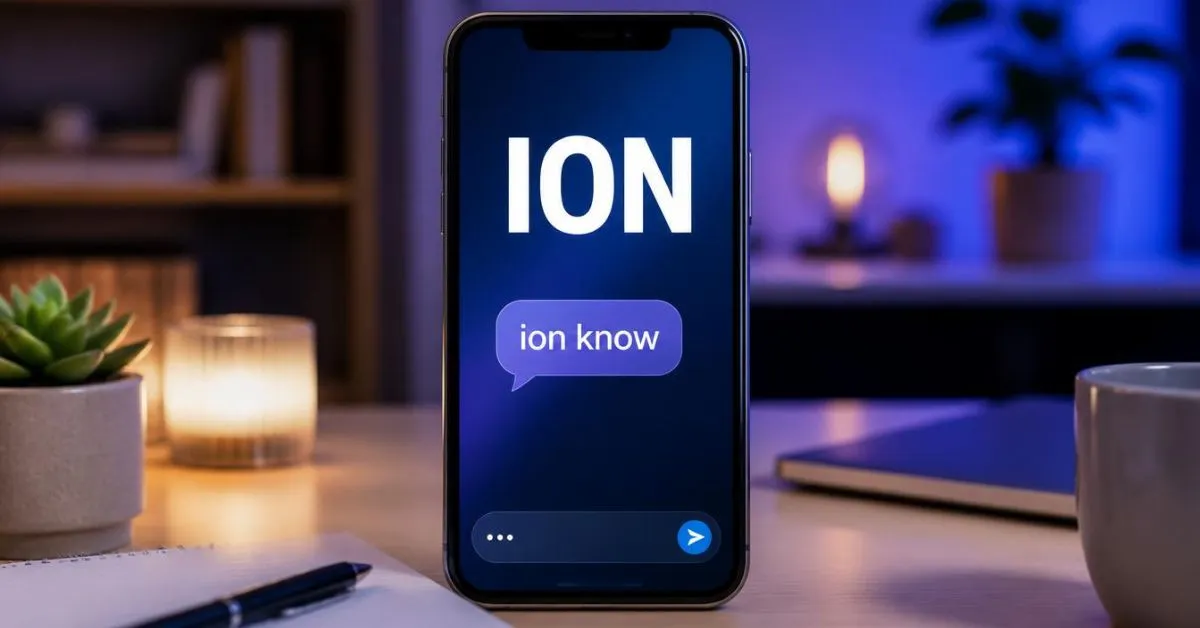
Have you ever received a text that says “ion know” or “ion even care” and wondered what the sender meant? I remember seeing this kind of message and noticing how one small change in spelling can make a familiar sentence look confusing. If you are searching for what does ion mean in text, you are probably trying to understand a message, a social media comment, or a conversation with a friend.
ION is a casual texting form of “I don’t.” It is often used in relaxed, informal conversations, especially when someone wants to sound natural or playful. However, the meaning can depend on the words around it. In some messages, it may be a shortened form of “I don’t,” while in others, it may have a different meaning.
This guide explains the meaning of ION, where people use it, how it works in sentences, and how to respond without guessing what someone intended.
⚡ Quick Answer
ION usually means “I don’t” in texting and online chat. It is an informal way to write the phrase, as in “ion know” for “I don’t know.” People use it in casual conversations, social media posts, and messages with friends. Its meaning can change if the surrounding words suggest another use.
What Does ION Mean in Texting?
In everyday texting, ION is commonly used as a shortened, informal spelling of “I don’t.” The sender drops the apostrophe and changes the sound of the phrase to make it quick to type.
For example:
- “ion know” = “I don’t know.”
- “ion want to go” = “I don’t want to go.”
- “ion care” = “I don’t care.”
The word is not usually meant to be read as the chemical term “ion.” In a casual message, the surrounding words help you understand the intended meaning.
ION is most natural in informal conversations. It may appear in texts, group chats, comments, and social media captions. It is not a standard formal English abbreviation, so it is better to use “I don’t” in school assignments, business emails, or professional writing.
Where and When Do People Use ION?
ION is used in relaxed, conversational settings. You might see it when someone is chatting with a friend, sharing an opinion, or reacting to something online.
Text messages and group chats
A friend might say, “ion feel like going out tonight.” They are simply saying, “I don’t feel like going out tonight.” The short form makes the message sound casual.
Social media comments
People sometimes use ION in comments or captions to express a quick thought. For example, “ion even know what happened” can be a casual reaction to a confusing post.
Playful conversations
Some people use ION because it matches their everyday speech or the style of their friends. It can sound relaxed and familiar rather than formal.
The tone is not always the same. “ion know” may sound neutral, while “ion care” could sound dismissive. Read the whole sentence before deciding how the sender feels.
How to Use ION in a Sentence
The easiest way to use ION is to replace “I don’t” in an informal sentence. It usually comes before a verb, adjective, or phrase that completes the thought.
Casual text
ION
“ion know what you mean.”
Meaning: I don’t know what you mean.
Casual text
ION
“ion wanna argue today.”
Meaning: I don’t want to argue today.
Casual text
ION
“ion think that’s right.”
Meaning: I don’t think that’s right.
More examples
| ION sentence | Standard English |
| “ion remember.” | I don’t remember. |
| “ion have time.” | I don’t have time. |
| “ion wanna leave.” | I don’t want to leave. |
| “ion see it.” | I don’t see it. |
| “ion like that.” | I don’t like that. |
ION often appears with other casual texting words, such as “wanna,” “gonna,” and “ain’t.” These are informal choices, not required spellings.
Different Meanings of ION by Context
Although “I don’t” is the usual meaning in casual texting, ION can also mean something else. The words around it matter.
Explore ION meanings
Choose a context to see what the sender may mean.
Casual texting
Science or chemistry
Names and usernames
Common
“I don’t”
“ion know what happened” means “I don’t know what happened.”
Use the surrounding words to confirm the intended phrase.
ION versus the word “ion”
The lowercase form “ion” in a sentence such as “ion know” usually points to texting slang. A science question about ions, however, is using the word in its regular dictionary sense. Capitalization can offer a clue, but context is more reliable.
ION in “ion even know”
The phrase “ion even know” means “I don’t even know.” It can express confusion, surprise, or uncertainty. The sender might be unsure about an answer or simply reacting to something unexpected.
ION in “ion care”
“ion care” means “I don’t care.” It may be a casual way to say something does not matter to the sender, but it can also sound rude or dismissive. The relationship and conversation help determine the tone.
Similar Abbreviations & How They Differ
Several texting shortcuts can look similar to ION. Knowing the difference makes it easier to understand a message quickly.
IDK
I don’t know
A widely recognized abbreviation for uncertainty or lack of information.
Example: “IDK what to do.”
IDC
I don’t care
Shows a lack of concern or interest, depending on the conversation.
Example: “IDC where we eat.”
ION
I don’t
An informal spelling of the phrase, often followed by another word.
Example: “ion know.”
IMO
In my opinion
Introduces a personal view rather than saying you do not know something.
Example: “IMO, that movie was great.”
How to Reply When Someone Says ION
You do not need to use the same slang to respond. A clear, friendly reply works well in most situations.
If they say “ion know”
You can ask a follow-up question or offer help.
- “No worries, do you want to figure it out together?”
- “That’s okay. I’ll check and let you know.”
- “What part are you unsure about?”
If they say “ion care”
The best response depends on the tone. If they are joking, a playful answer may fit. If they seem upset, a calm question can help.
- “Fair enough 😂”
- “Okay, is everything good?”
- “No problem, we can talk about something else.”
If you do not understand ION
You can simply ask, “Do you mean I don’t?” This is especially useful if the message could have another meaning.
Common Mistakes to Avoid
Mistaking ION for a formal abbreviation
ION is casual texting language. It is not a replacement for “I don’t” in every type of writing. Keep the standard phrase in formal or professional situations.
Assuming the sender is rude
A phrase such as “ion care” can sound blunt, but the sender may be joking or speaking casually. Do not decide the emotional tone from the abbreviation alone.
Confusing ION with IDK
ION means “I don’t,” while IDK means “I don’t know.” They may appear together, but they do not have the same function.
Thinking every use has the same meaning
ION may mean “I don’t” in a message, but it can also refer to a scientific ion or another name. Check the full sentence and context.
🎯 Practical Takeaway
ION usually means “I don’t” in casual texting, especially in phrases like “ion know” and “ion want to.” If someone sends it, read the rest of the message before deciding what they mean or how they feel. When in doubt, ask a simple follow-up question.
FAQs:
What does ION stand for in texting?
ION commonly stands for “I don’t” in informal texting. It is a casual spelling used in phrases such as “ion know” and “ion care.” It does not have one fixed meaning in every context, so the words around it help confirm the intended message.
What does ION mean from a girl?
If a girl sends ION in a text, it usually means “I don’t,” just as it does from anyone else. For example, “ion know” means “I don’t know.” The phrase itself does not prove whether she is interested, upset, or joking. Look at the full conversation.
What does ION mean from a guy?
ION usually means “I don’t” when a guy uses it in a casual text. A message like “ion wanna go” means “I don’t want to go.” The abbreviation does not have a special meaning based on the sender’s gender. Context and tone matter more.
Is ION the same as IDK?
No. ION is an informal way to write “I don’t,” while IDK is an abbreviation for “I don’t know.” They can appear in the same conversation, but they are not interchangeable. For example, “ion care” means “I don’t care,” not “I don’t know.”
Is ION a rude word?
ION itself is not a rude word. It is a casual texting form of “I don’t.” However, the phrase that follows it can sound blunt. “Ion know” is usually neutral, while “ion care” may sound dismissive depending on the conversation and the sender’s tone.
What does “ion even know” mean?
“Ion even know” means “I don’t even know.” People use it to express confusion, uncertainty, or surprise. For example, someone might reply “ion even know what happened” after hearing an unexpected story. It is a casual expression rather than a formal English sentence.
Conclusion:
Understanding what does ION mean in text can make online conversations much easier to follow. ION usually means “I don’t,” and people use it as a casual way to express a thought, feeling, or opinion. Its meaning can change slightly with the context, so paying attention to the full message is important.
Whether you see ION on Snapchat, Instagram, or in a text from a friend, you can usually understand it by reading the words around it. If the message is unclear, asking the sender what they mean is the simplest way to avoid confusion.
Remember that texting abbreviations are meant to save time and keep conversations relaxed. Once you know how ION works, you can recognize it more easily and use it naturally in your own chats. A little context goes a long way when understanding short forms like this.
I am Alex Carter, an author at Meaningary.com and an expert in meanings, slang, and everyday expressions. I specialize in explaining name meanings and language in a simple, clear, and reader friendly way.