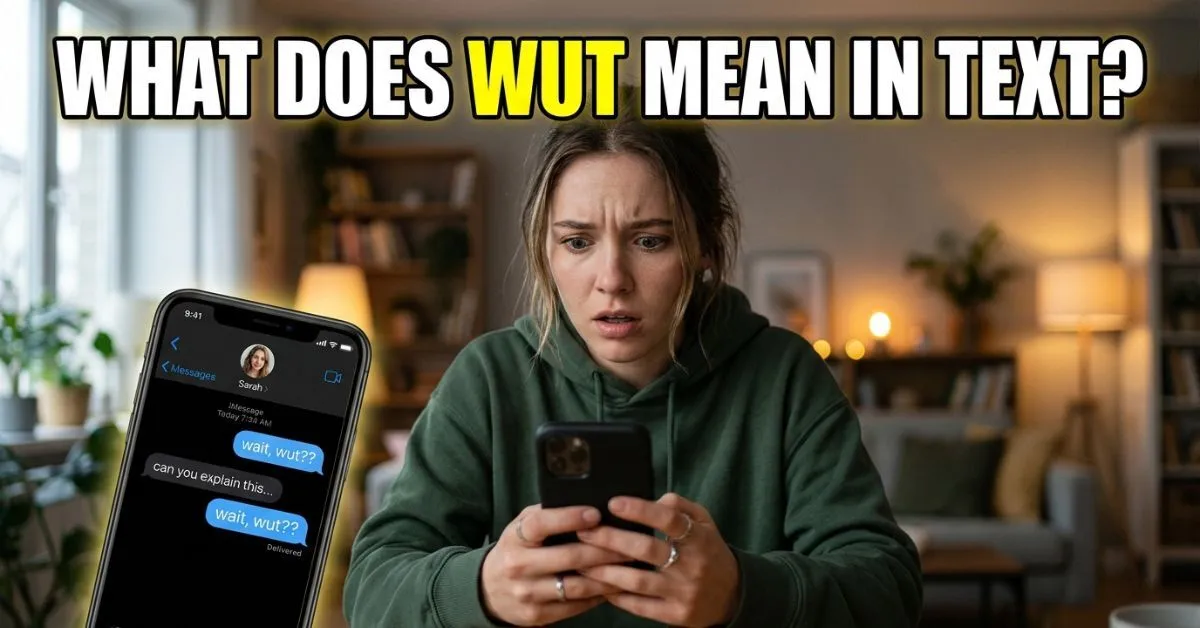
Have you ever opened a text, seen “wut,” and wondered if the person was confused, joking, or trying to sound rude? I have seen this kind of spelling in casual chats, comments, and messages, and the meaning is usually simple but the tone can change depending on the conversation.
If someone sends “wut” instead of “what,” you may be looking for more than just a dictionary definition. You may want to know what they really mean, whether the spelling has a special meaning, and how you should respond.
The good news is that “wut” is usually an informal version of “what.” It can show confusion, surprise, disbelief, or a playful tone. This guide explains how people use it, what different contexts can suggest, and when another reply may work better.
⚡ Quick Answer
WUT usually means “what” in texting. It is an informal, playful, or exaggerated spelling often used to show confusion, surprise, disbelief, or a casual reaction. Its exact tone depends on the conversation. “Wut?” can simply mean “What?” while “Wut 😭” may express shock or disbelief.
What It Means in a Text
In texting, “wut” is generally a nonstandard spelling of “what.” It does not usually represent a completely different word. Instead, people type it because they want their message to feel more casual, funny, dramatic, surprised, or intentionally informal.
For example:
“Wut are you doing?”
This simply means:
“What are you doing?”
The spelling makes the message feel different. Standard “what” can sound neutral, while “wut” may sound more relaxed or playful.
The meaning also depends on punctuation and the words around it.
Compare these examples:
- “wut?” likely confusion or a request for clarification.
- “WUT?!” strong surprise or disbelief.
- “wut 😭” often humorous shock or disbelief.
- “wut lol” usually playful confusion.
- “wut…” may suggest confusion, awkwardness, or disbelief.
So, if someone texts you “wut,” there is usually no secret code to decode. Read the surrounding conversation first.
It is also worth remembering that spelling style is personal. One person may use “wut” as a joke, while another may type it simply because they prefer casual internet-style writing.
Where & When People Use It
“Wut” is most natural in informal digital communication. You may see it in text messages, online chats, gaming conversations, social media comments, memes, and casual group messages.
It is much less suitable for formal writing. A work email, school paper, business document, or professional message would normally use “what” instead.
People may choose “wut” when they want their message to feel:
- Casual
- Playful
- Surprised
- Confused
- Dramatic
- Humorous
- Intentionally silly
For example, imagine a friend tells you:
“I just bought a horse.”
You might respond:
“Wut 😭”
You are probably not asking for a formal explanation. You are showing that the statement surprised you.
Another example:
Friend: “I forgot my keys again.”
You: “Wut? How?”
Here, “wut” can simply make the reaction sound more casual.
The word can also appear as part of exaggerated online humor. Someone might write:
“WUUUT?”
That stretches the same basic idea. The extra letters emphasize surprise.
How to Use It in a Sentence
Using “wut” is easy because it normally works anywhere casual “what” would work.
Asking for information
“Wut time are we leaving?”
Meaning: “What time are we leaving?”
Showing confusion
“Wut do you mean?”
Meaning: “What do you mean?”
Reacting to surprising news
“Wut?! You actually did it?”
Here, the spelling helps make the surprise stronger.
Responding to something strange
“Wut is happening 😂”
This can sound humorous rather than seriously confused.
Showing disbelief
“Wut. No way.”
The short sentence can create a dramatic reaction.
Making a playful response
“Wut 😂”
This may be enough when a friend says something unexpected.
The main rule is simple: use “wut” when the conversation is casual and you want an informal tone.
If you are speaking with someone you do not know well, or the situation is professional, standard “what” is safer.
Different Meanings by Context
Although “wut” generally means “what,” its emotional meaning can change with context.
1. Simple confusion
Someone may genuinely not understand what you said.
“Wut do you mean?”
This is close to saying:
“What do you mean?”
There may be no humor or attitude at all.
2. Surprise
If someone tells you something unexpected, “wut” can mean:
“Wait, what?”
For example:
“I got front-row tickets.”
“Wut?!”
The reaction shows surprise.
3. Disbelief
Sometimes “wut” communicates that something seems hard to believe.
“He finished the whole pizza himself.”
“Wut 😭”
Here, the person may be jokingly questioning the claim.
4. Playful confusion
Friends often use unusual spelling to make a reaction funnier.
“I accidentally sent the message to my boss.”
“Wut 💀”
The person is likely reacting with humorous disbelief.
5. Mild annoyance
In some conversations, “wut?” can sound impatient.
For example:
“Wut do you want?”
Depending on the relationship and previous messages, this could sound dismissive.
That does not mean “wut” itself is rude. The tone comes from the whole message and situation, not just the spelling.
6. Dramatic internet-style reaction
Sometimes “wut” is deliberately exaggerated.
“WUT?!”
This can communicate strong surprise without being genuinely angry.
Because digital messages do not carry facial expressions or voice tone, punctuation, emojis, and surrounding words can make a major difference.
Similar Abbreviations & How They Differ
People often confuse “wut” with other casual ways of saying “what.” They overlap, but their tone is not always identical.
| Term | Meaning | Typical tone |
| Wut | What | Casual, playful, surprised |
| Wat | What | Informal, often playful or intentionally misspelled |
| What? | What? | Neutral or direct |
| Wdym | What do you mean? | Asking for clarification |
| Huh? | What? / I don’t understand | Confused or surprised |
| Wha | What | Very casual or humorous |
| WTF | Strong reaction to something surprising or upsetting | Much stronger and potentially offensive |
One important distinction is “wdym.” While “wut” can simply mean “what,” “wdym” specifically asks someone to explain what they meant.
For example:
“I don’t think you should go.”
“Wdym?”
This means:
“What do you mean?”
Meanwhile:
“Wut?”
could simply mean:
“What?” or “Huh?”
The context determines which interpretation makes the most sense.
How to Reply
Your response should match the reason the person said “wut.”
If they seem confused, explain what you meant:
“I meant we should leave around 7.”
If they seem surprised, you can clarify:
“Yep 😂 I actually got the tickets.”
If they are joking, you can joke back:
“You heard me 😭”
If you are unsure what they mean, ask:
“What part confused you?”
A short response is often enough. You do not need to overthink a simple “wut.”
If “wut” sounds rude
Sometimes the surrounding message may make the tone feel sharp.
For example:
“Wut do you want?”
That could be casual between close friends, but it might sound annoyed in another conversation.
Instead of assuming the worst, look at the person’s normal texting style. Do they regularly use informal spellings? Are they joking? Was the conversation already tense?
If needed, respond calmly:
“I was just asking about the plans.”
That keeps the conversation clear without creating unnecessary conflict.
Common Mistakes
Assuming “wut” has one fixed emotional meaning
It usually means “what,” but the emotion can range from confusion to surprise or humor.
Thinking it is always rude
“Wut” is not automatically disrespectful. Friends may use it casually all the time.
Treating it like a formal abbreviation
It is better understood as an informal spelling rather than a formal abbreviation with a strict definition.
Using it in professional writing
Even though people understand it, “wut” can look too casual in emails, applications, reports, or other formal communication.
Reading too much into one message
A single “wut” usually does not tell you how someone feels about you. The broader conversation matters much more.
Confusing it with “wdym”
“Wut” generally means “what,” while “wdym” specifically asks for the meaning or explanation of something.
🎯 Practical Takeaway
If someone sends “wut,” the safest interpretation is simply “what?” Look at the surrounding words, punctuation, emojis, and conversation before deciding whether they sound confused, surprised, playful, or annoyed. For your own messages, use “wut” mainly in casual chats where an informal tone fits.
FAQs:
Is “wut” the same as “what” in texting?
Usually, yes. “Wut” is an informal spelling of “what” commonly used in casual digital communication. The spelling can add a playful, humorous, surprised, or exaggerated feeling, but the basic meaning remains “what.”
What does “wut?” mean from a girl or guy?
“Wut?” usually means “What?” The person’s gender does not give the word a special meaning. Their tone depends on the conversation. It could show confusion, surprise, disbelief, or simple curiosity.
Is “wut” rude?
Not necessarily. “Wut” is often playful or casual. However, a message such as “wut do you want?” may sound annoyed depending on the situation. The surrounding words and relationship are more important than the spelling alone.
What does “wut 😭” mean?
“Wut 😭” often expresses humorous confusion, shock, or disbelief. The crying emoji can make the reaction feel dramatic or funny rather than genuinely sad. For example, someone may use it after hearing something completely unexpected.
What is the difference between “wut” and “wdym”?
“Wut” usually means “what,” while “wdym” means “what do you mean?” “Wut” can be a general reaction, whereas “wdym” more directly asks someone to explain or clarify their statement.
Can I use “wut” in a formal message?
It is best to use “what” in formal communication. “Wut” is an informal spelling suited to casual conversations, texts, online chats, and playful messages. Standard spelling is clearer and more appropriate for professional or academic settings.
Conclusion:
So, what does wut mean in text? In most cases, it is simply a casual or playful spelling of “what.” The interesting part is the tone. A short “wut?” may show confusion, while “WUT?!” can express strong surprise, and “wut 😭” may be a humorous reaction to something unexpected.
The best way to understand it is to look beyond the single word. Consider the punctuation, emojis, previous messages, and the person’s usual texting style. That context can tell you much more than the spelling itself.
If you want to use “wut” yourself, keep it for relaxed conversations where informal language fits. For school, work, or other formal situations, stick with “what.” Once you know that difference, this little texting expression is pretty easy to understand.

I am Logan Reed, an author at Meaningary.com and an expert in meanings, slang, and everyday expressions. I specialize in explaining name meanings and language in a simple, clear, and reader friendly way.