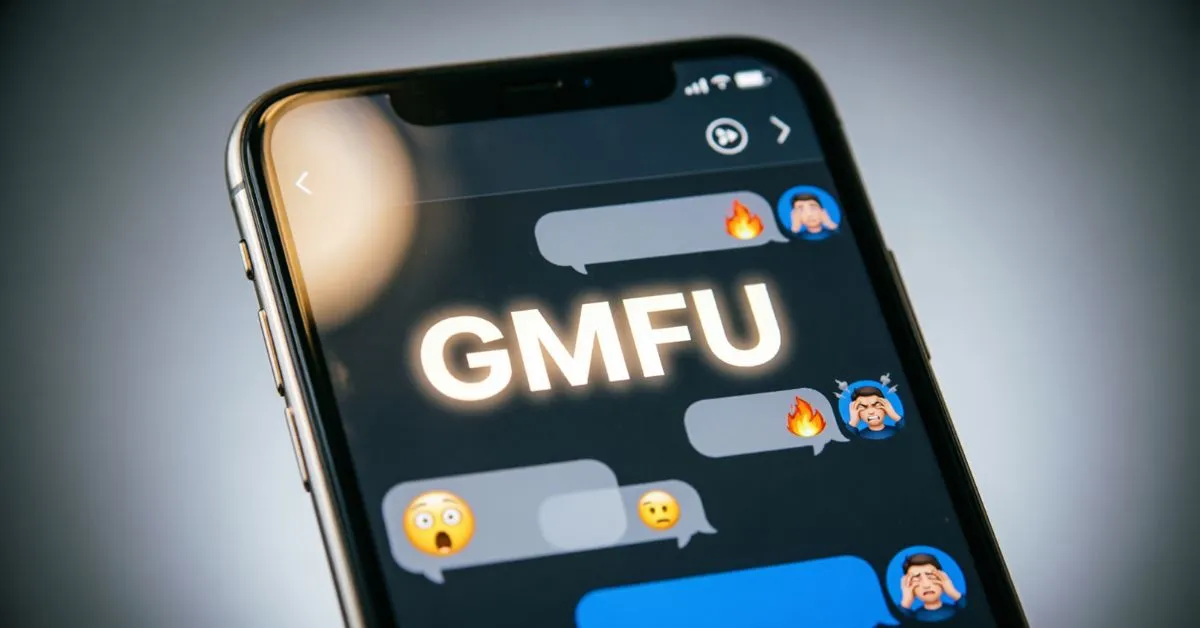
Have you ever received a text or seen a comment saying “GMFU” and wondered what it actually means? 🤔 You’re not alone! GMFU is a popular internet slang abbreviation commonly used in texting, social media, TikTok, and casual online conversations.
Depending on the context, it can express strong disbelief, frustration, shock, or annoyance.
In this guide, we’ll explain what GMFU means, how people use it in texts and social media, and give you simple examples so you can understand the slang instantly. 📱✨
⚡ Quick Answer
GMFU usually means “got me fucked up.” It is slang used to show strong frustration, disbelief, shock, or feeling disrespected. Depending on the context, someone may use it seriously or jokingly. Because the full phrase contains profanity, GMFU is best suited to casual conversations, close friends, and informal online spaces.
What Does GMFU Mean?
GMFU is an internet slang abbreviation for “got me fucked up.” The phrase is usually not meant literally. Instead, it tells someone that their words, behavior, or a situation has caused a strong emotional reaction.
Depending on the context, GMFU can communicate ideas such as:
- “You have got to be kidding me.”
- “That really upset me.”
- “That is seriously disrespectful.”
- “I cannot believe this.”
- “That situation is ridiculous.”
The exact feeling can change. One person might use GMFU because they are angry, while another might use it because something is so absurd that they are laughing at it.
For example:
“You said you were coming at 7, then showed up at midnight. GMFU.”
Here, the speaker is probably annoyed and feels that the other person acted badly.
But it can also be playful:
“You really ate my last slice of pizza? GMFU 😂”
In this case, the person may not be genuinely angry. The expression is being used for dramatic humor.
The safest way to understand it is to look at what happened immediately before the message. The situation and relationship usually tell you whether GMFU is serious or playful.
The slang meaning is well established in online usage, with documented examples dating back to the late 2000s. Dictionary.com also identifies “got me fucked up” as the primary meaning.
Where Did GMFU Come From?
The exact origin of the acronym is not completely clear, so it is better not to treat one specific date or person as its definite creator.
The longer phrase “got me fucked up” has roots in informal American slang and has appeared in hip-hop and other forms of popular culture. The shortened form GMFU later became useful in online communication because people could express the same strong reaction with only four letters. Dictionary.com traces documented internet use of the acronym to the late 2000s.
Online slang often develops this way. A longer spoken expression gets shortened, then spreads through texts, forums, social platforms, music, memes, and group chats.
It is also worth being careful with claims that GMFU has one clearly proven cultural origin. Some websites attribute it to particular communities or give very specific early dates, but those claims are not consistently supported. A safer description is that the phrase comes from informal slang and became established as an internet abbreviation over time.
Today, the acronym is recognizable in casual online conversations, even though not everyone uses it.
Who Uses GMFU & Where?
GMFU is mainly found in informal communication. You may encounter it in texts, private messages, comments, captions, group chats, or online discussions.
The meaning generally stays the same, but the setting can change how strong it feels.
Text messages
Friends may use GMFU to react quickly to something annoying, surprising, or disrespectful.
“He canceled again after I drove 40 minutes. GMFU.”
The speaker is clearly frustrated.
Group chats
A group might use it after someone shares an unbelievable story.
“They charged me $20 for a tiny sandwich.”
“Nah, GMFU 😭”
Here, the reaction may be exaggerated for humor.
TikTok, Instagram, or X
GMFU can appear in comments or captions when people react to relationship drama, surprising news, awkward situations, or something they find outrageous.
Because social-media conversations can be public, remember that slang that feels funny among friends can sound much harsher to strangers.
Private conversations
Among close friends, GMFU may be used casually or playfully. The relationship matters because people who know each other’s humor are more likely to understand the intended tone.
There is no reliable rule that a particular age group or platform “owns” the expression. Usage changes over time, and online slang can spread across different communities.
How to Use GMFU Correctly
The easiest way to use GMFU is as a strong reaction.
You can use it when somebody does something that feels unreasonable:
“You borrowed my car and returned it empty. You GMFU.”
You can also react to a situation:
“The flight was delayed again. This GMFU.”
Or use it jokingly with someone you know well:
“You finished the whole cake without me? GMFU 😂”
The capitalization is flexible. GMFU, gmfu, and similar lowercase forms generally mean the same thing.
The important issue is tone. GMFU contains baffling, so it is much stronger than a simple phrase like “that is unbelievable” or “seriously?”
It is usually better suited to:
- Close friends
- Casual texts
- Informal group chats
- Social-media comments
- Joking conversations
- Strong emotional reactions
It is usually a poor choice for:
- Job applications
- Work emails
- Customer-service messages
- School assignments
- Professional communication
- Conversations with someone you barely know
If you want the same basic idea without profanity, you can say “you’ve got to be kidding me,” “that’s messed up,” “that’s unbelievable,” or “seriously?”
Example: serious use
“You told everyone my private business. GMFU.”
This sounds genuinely upset.
Example: playful use
“You ate the fries I saved? GMFU 😂”
This could simply be friendly teasing.
Example: disbelief
“They expect us to finish all of that in one hour? GMFU.”
Here, the main feeling is disbelief rather than personal anger.
Related Slang You May See
GMFU belongs to a larger group of internet expressions used to show strong reactions. These terms are not exact replacements, but knowing the differences makes online conversations easier to understand.
SMH
Have you ever received a text or seen a comment saying “GMFU” and wondered what it actually means? 🤔 You’re not alone! GMFU is a popular internet slang abbreviation commonly used in texting, social media, TikTok, and casual online conversations. Depending on the context, it can express strong disbelief, frustration, shock, or annoyance. In this guide, we’ll explain what GMFU means, how people use it in texts and social media, and give you simple examples so you can understand the slang instantly. 📱✨ “Shaking my head,” usually showing disappointment, disbelief, or annoyance without the same level of profanity.
WTF
Meaning: “What the fuck,” a strong reaction to something surprising, confusing, or shocking.
FR
Meaning: “For real,” used to show agreement, seriousness, or emphasis.
ICL
Meaning: “I can’t lie,” often introducing a blunt or honest opinion.
WTW
Meaning: “What’s the word?” or, depending on context, a question about plans or what is happening.
NGL
Meaning: “Not gonna lie,” often used before a candid statement.
The key difference is emotional force. GMFU usually carries a sharper edge because it expresses a strong reaction and contains profanity.
Is GMFU Still Used or Dated?
GMFU is still recognizable in online slang in 2026, especially in casual texts and social-media conversations. Recent slang references continue to define it as “got me fucked up” and describe uses involving frustration, disbelief, shock, or feeling disrespected.
That does not mean everyone uses it.
Internet slang changes quickly. A phrase can be common in one online community and barely used in another. Some people may understand GMFU immediately, while others may have never seen it.
The expression also has different levels of intensity depending on the speaker. Someone may use it as a genuine complaint, while another person may use it as exaggerated humor.
So, if you are wondering whether GMFU is “cool,” “old,” or “outdated,” there is no universal answer. Context matters more than age or platform.
If you see it in a message, focus on what the person is reacting to rather than assuming the acronym itself tells you exactly how they feel.
What Not to Confuse GMFU With
GMFU can be confusing because the letters do not reveal the phrase very clearly. There are also alternative acronym expansions listed in some abbreviation databases, but they are much less relevant in ordinary texting. Abbreviations.com, for example, lists several possible meanings outside everyday slang.
In a casual text or social-media comment, “got me fucked up” is normally the meaning to consider first.
Do not automatically interpret GMFU as a literal statement that someone is physically or mentally unwell. In slang, it is generally an emotional reaction.
Also, do not assume that every use means serious anger.
Compare these:
“My boss embarrassed me in front of everyone. GMFU.”
This likely communicates real frustration.
“You really took the last cookie? GMFU 😂”
This may be playful.
The same abbreviation can therefore have different emotional weight.
If you are unsure, look at the words around GMFU, emojis, punctuation, and the relationship between the people talking. A laughing emoji may soften the message, while an argument or angry wording can make it much more serious.
🎯 Practical Takeaway
Remember that GMFU usually means “got me fucked up” and carries a strong, informal tone. It can express anger, disbelief, frustration, or playful exaggeration depending on the situation. If you use it yourself, save it for casual conversations where profanity and strong slang are clearly appropriate.
FAQs:
What does GMFU mean in texting?
GMFU usually means “got me fucked up.” It expresses frustration, disbelief, shock, or annoyance.
What does GMFU stand for?
GMFU stands for “got me fucked up.” It is informal slang commonly used in texts and social media.
Is GMFU a bad word?
The acronym contains profanity in its full form, so it is considered strong, casual language and is best avoided in formal settings.
Does GMFU always mean anger?
No. It can show anger, frustration, disbelief, shock, or even joking amusement, depending on the context.
Can GMFU be used jokingly?
Yes. Friends may use GMFU humorously when reacting to something funny, surprising, or ridiculous.
What does GMFU mean on TikTok or Instagram?
It generally means “got me fucked up” and is used to show disbelief, frustration, annoyance, or amusement.
Is GMFU appropriate for work?
Usually not. Since it contains profanity, use safer phrases like “that’s unbelievable” or “I can’t believe this.”
What does GMFU mean from a girl or guy?
The meaning is the same for everyone: “got me fucked up.” The exact emotion depends on the conversation.
How do you use GMFU in a sentence?
Example: “You canceled at the last minute? GMFU.” It shows that the person is surprised, annoyed, or frustrated.
What is a softer way to say GMFU?
Try “Seriously?” “You’ve got to be kidding me,” “That’s unbelievable,” or “I can’t believe this.”
Conclusion:
So, what does GMFU mean? In most texting and internet-slang situations, it means “got me fucked up.” It is a strong reaction used when someone feels frustrated, shocked, disrespected, annoyed, or simply unable to believe what happened.
The phrase is flexible. A serious message can make GMFU sound angry, while a laughing emoji or a close friendship can turn it into playful exaggeration. That is why context matters more than the four letters alone.
GMFU is still understandable in casual online communication, but it is not a formal expression. If you see it in a text, read the surrounding conversation before deciding how strongly the person means it. If you want to use it yourself, make sure the setting and relationship can handle its blunt tone.

I am Logan Reed, an author at Meaningary.com and an expert in meanings, slang, and everyday expressions. I specialize in explaining name meanings and language in a simple, clear, and reader friendly way.