Have you ever received a text that says “YPU” and wondered what the sender was trying to say? A short message can be confusing, especially when it looks like a familiar word with one letter out of place. You may be chatting with a friend, replying to someone you like, or reading an online message when this three-letter term appears.
If you searched for what does ypu mean in a text message, you are probably looking for a simple explanation. The good news is that you can often understand it by looking at the words around it. YPU may be a typing mistake, or it may have a special meaning in a particular chat or community.
In this guide, I will explain the likely meanings, show you how to read it in context, and share easy ways to reply. You will also learn when it is better to ask the sender instead of guessing.
⚡ Quick Answer
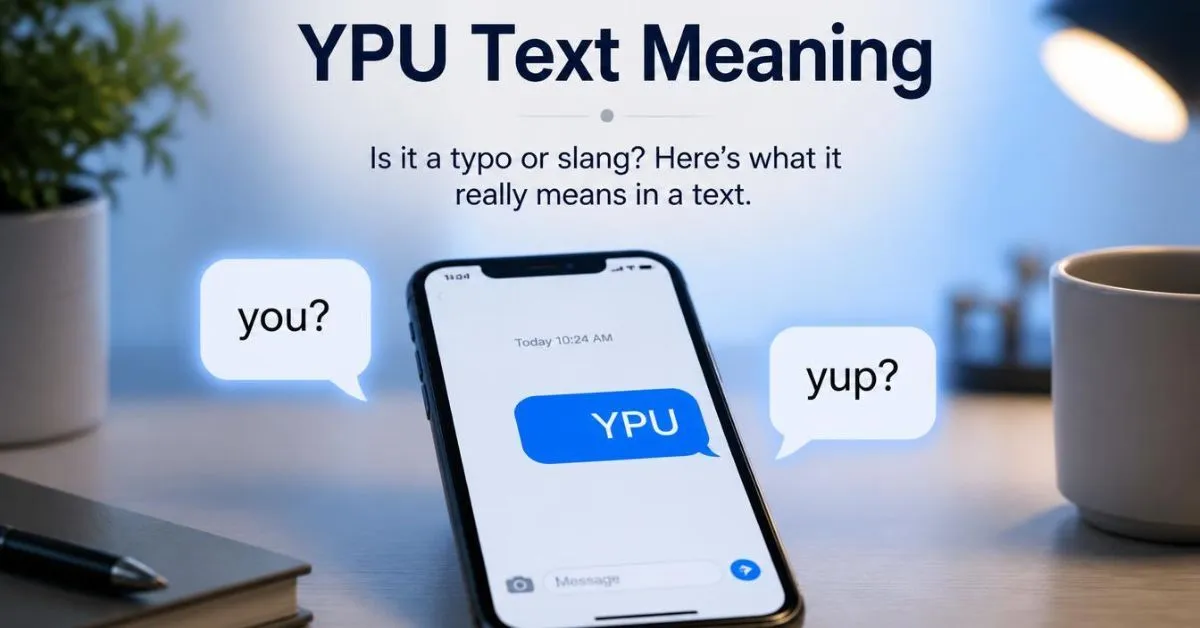
YPU is not a standard, widely recognized texting abbreviation with one fixed meaning. It may be a typo for “you,” “yup,” or another nearby word on the keyboard. The exact meaning depends on the message and the sender. If the sentence seems unclear, ask what they meant.
What Does YPU Mean In a Text?
YPU does not have one established meaning in everyday American texting. Unlike familiar abbreviations such as LOL or BRB, it is not a widely recognized shortcut that everyone understands the same way.
A likely explanation is that the sender typed the letters in the wrong order or hit a nearby key. For example, “ypu” may have been intended as “you.” It could also be an informal spelling of “yup,” which means yes, but that interpretation depends on the sentence.
Consider these two messages:
- “I miss ypu.” The sender may have meant “I miss you.”
- “Ypu, I can come.” The sender may have meant “Yup, I can come.”
The first looks like a typing error. The second could be a mistake or an intended casual spelling of “yup.” Neither meaning is guaranteed.
The safest way to understand YPU is to read the whole message rather than treating the three letters as a fixed code.
Is YPU a Typo for You or Yup?
The two most useful possibilities to check are “you” and “yup.” They are different words, so the surrounding sentence matters.
YPU as a typo for “you”
“Ypu” may result from switching the letters U and P while typing. On a standard QWERTY keyboard, those keys are next to each other.
Examples:
- “Are ypu coming?” → “Are you coming?”
- “I told ypu yesterday.” → “I told you yesterday.”
- “Can ypu help me?” → “Can you help me?”
If the sentence makes sense after replacing YPU with “you,” a typing error is a reasonable possibility.
YPU as a casual “yup”
“Yup” is an informal way to say yes. Someone might type YPU by accident while trying to write it.
Example:
“Are you free tonight?”
“YPU, after 7.”
Here, “YPU” may mean “Yup,” or simply be a typo. The reply sounds like agreement, so the conversation gives you a clue.
What about other meanings?
A sender may use YPU as a personal shortcut, username, or term from a specific online group. Those uses are not universal. I would not assign a special meaning without seeing the context.
How to Use YPU in a Sentence
YPU is not a standard abbreviation that I would recommend using in a normal text. If you mean “you,” write “you.” If you mean “yes,” use “yup” or “yes.”
That keeps your message clear and avoids making the other person guess.
Examples of the intended meanings
| Message with YPU | Likely intended text |
| “I miss ypu.” | “I miss you.” |
| “Are ypu ready?” | “Are you ready?” |
| “YPU, I agree.” | “Yup, I agree.” |
| “Can ypu call me?” | “Can you call me?” |
These examples show possible corrections, not confirmed meanings. The sender’s actual intention may be different.
Better ways to write the same messages
- “I miss you.”
- “Are you ready?”
- “Yup, I agree.”
- “Can you call me?”
If you are writing to a teacher, customer, coworker, or someone you do not know well, avoid unusual shortcuts. Clear words work better.
Different Meanings by Context
The meaning of YPU can change depending on the sentence and the platform. Here are some common situations where you might see it.
In a message from a friend
If a friend writes, “Can ypu send me the photo?” they may have accidentally switched the U and P. You can usually understand the message as a request to send a photo.
In a reply to a question
If someone answers “YPU” after you ask, “Are you coming?” they may have intended “Yup.” The response suggests agreement, but it is still worth checking if the plans matter.
In a message from a crush
If someone texts “I miss ypu,” the word may simply be a typo for “you.” The emotional meaning comes from the full sentence, not the letters YPU themselves.
In a group chat or online community
Some groups create their own shorthand. If YPU appears with other unusual terms, it may be a community-specific expression. Look at how the group uses it before deciding what it means.
In a username or profile
YPU might be part of a username, account name, or other identifier. In that case, it may not be a texting abbreviation at all.
Similar Texting Terms & How They Differ
Knowing familiar texting words can help you spot whether YPU is a typo.
- You: The ordinary word used to address someone. It is the likely correction when YPU appears in a sentence about another person.
- Yup: An informal way to say yes. It fits replies that show agreement or confirmation.
- U: A common texting shortcut for you. It is informal and often used in quick chats.
- Yep: Another casual way to say yes. It is close in meaning to yup, but it is spelled differently.
- Yeah: An informal agreement or positive response. It can sound more conversational than a simple yes.
YPU is not interchangeable with these terms. Its intended meaning must be inferred from the message.
How to Reply to YPU in a Text
You do not need to make a big deal out of a confusing three-letter message. A short, friendly reply is usually enough.
If you think they meant “you”
Reply naturally to the sentence.
Them: “I miss ypu.”
You: “I miss you too.”
If the meaning is clear, there is no need to correct their spelling.
If you think they meant “yup”
Continue the conversation as you normally would.
Them: “YPU, I can come.”
You: “Great! What time?”
If you are not sure
Ask a simple question:
- “Did you mean you?”
- “Do you mean yup?”
- “What did you mean by YPU?”
This is especially helpful if the message affects plans, money, work, or an important personal conversation.
If you want to be playful
With a close friend, you could say:
“YPU? 😂 Did your keyboard have a moment?”
Use humor only if it fits your relationship. A neutral question is better if the sender might be embarrassed.
Common Mistakes to Avoid
Assuming YPU always means “you”
That is a reasonable guess in some sentences, but it is not a confirmed definition. A different context may point to another word.
Treating every unusual spelling as slang
People make typing mistakes all the time. A three-letter word does not automatically have a hidden meaning.
Reading too much into the message
If someone sends “I miss ypu,” the typo does not tell you whether they are joking, upset, or being romantic. Focus on the whole message and the conversation.
Correcting someone unnecessarily
If you understand what the sender means, you can simply reply. Not every typo needs to be pointed out.
Guessing when the meaning matters
If YPU appears in a message about an appointment, payment, or important plan, ask for clarification rather than relying on a guess.
🎯 Practical Takeaway
YPU is not a standard texting abbreviation with one agreed meaning. It may be a typo for “you” or “yup,” but the sentence and sender give you the best clue. Read the surrounding message, reply naturally when the meaning is clear, and ask a quick question when it is not.
FAQs:
What does YPU mean in a text message from a girl?
YPU does not have a special meaning simply because a girl sends it. She may have made a typo for “you” or “yup,” or she may use it as a personal shortcut. Read the entire message to understand what she intended.
What does YPU mean in texting from a guy?
A guy may use YPU as a typing mistake, an informal spelling of “yup,” or a personal abbreviation. There is no standard meaning tied to the sender’s gender. The words around YPU will help you understand the message.
Is YPU a real texting abbreviation?
YPU is not a widely recognized texting abbreviation with one fixed definition. It may appear as a typo or an informal spelling, but it is not as established as common shortcuts like LOL, BRB, or IDK.
Does YPU mean you?
It can be a typo for “you,” especially when it appears in a sentence such as “I miss ypu” or “Can ypu help me?” However, YPU is not a confirmed abbreviation for you. Check the full sentence before deciding.
Does YPU mean yup?
YPU may be a typing mistake for “yup,” which is an informal way to say yes. If the message is an answer to a question and sounds like agreement, that is one possible interpretation.
What should I say if someone texts YPU?
Reply based on the sentence. If you understand the intended meaning, answer normally. If the message is confusing, ask, “Did you mean you or yup?” A short clarification is usually the easiest way to avoid misunderstanding.
Conclusion:
Understanding a short text like YPU can be harder than it looks, especially when you are unsure whether it is slang or a typo. The main thing to remember is that YPU does not have one standard meaning in everyday texting.
It may be an accidental spelling of “you,” an informal version of “yup,” or a personal shortcut used by the sender. The sentence around it matters more than the three letters alone. If the message is easy to understand, reply naturally.
If you are unsure, a friendly question can clear things up without making the conversation awkward. I have found that simple communication works best when a message is unclear.
You do not need to guess at hidden meanings or worry about every unusual spelling. Read the context, consider the likely correction, and ask when necessary. That small habit can make texting easier and more comfortable.

I am Alex Carter, an author at Meaningary.com and an expert in meanings, slang, and everyday expressions. I specialize in explaining name meanings and language in a simple, clear, and reader friendly way.