If you see the phrase “warrant for arrest” in a court record, police database, or legal document, it can immediately raise questions.
Does it mean the person has already been arrested? Does it mean they are guilty? Or does it mean the police are looking for them?
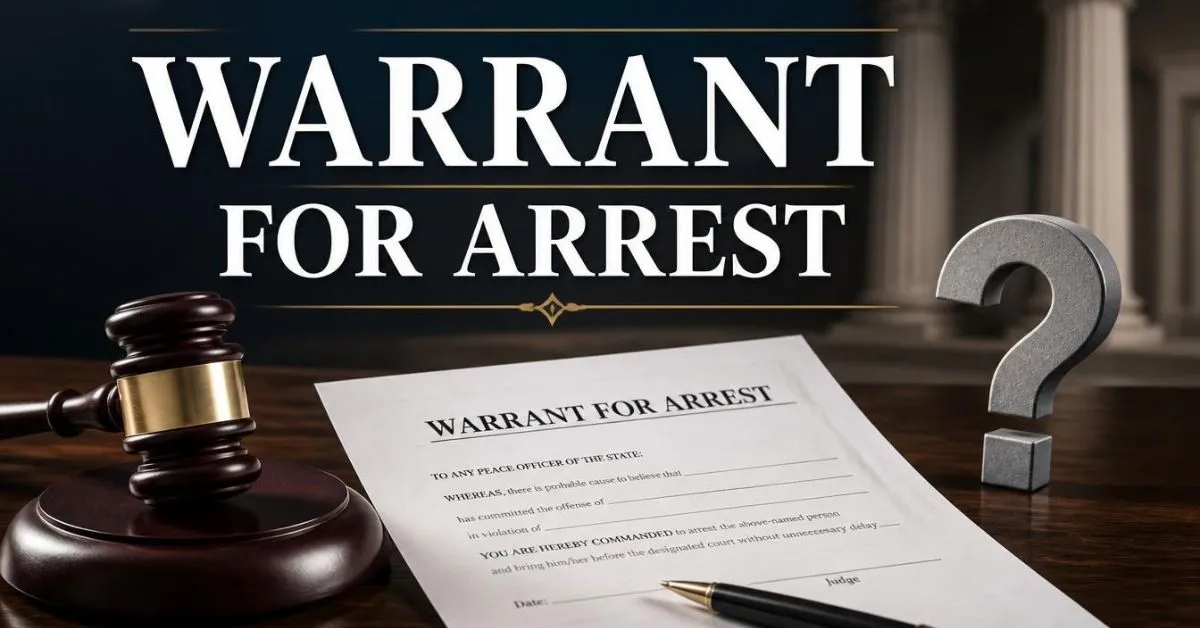
A warrant for arrest is a legal order that gives law enforcement authority to arrest a person identified in the warrant.
In federal cases, an arrest warrant generally requires probable cause, but the exact rules and procedures can vary by jurisdiction.
Understanding the phrase is important because an arrest warrant is not the same as a conviction. It can exist before an arrest takes place, and it does not by itself establish that the person is guilty.
Below, you’ll find the meaning in plain English, a simple example, common misunderstandings, and what to do if the term appears in a real case.
⚡ Quick Answer
A warrant for arrest is a legal order authorizing law enforcement to arrest a specific person. It usually identifies the person and the alleged offense. Having an arrest warrant does not automatically mean the person has been arrested or found guilty. The exact process depends on the applicable state or federal law.
What Does Warrant for Arrest Mean?
A warrant for arrest is a court-issued order that authorizes law enforcement to arrest a particular person.
In federal criminal cases, an arrest warrant may be issued after a judge or magistrate judge finds probable cause that an offense was committed and that the defendant committed it.
The most important thing to remember is that an arrest warrant is not a conviction.
For example, if a court record says that an arrest warrant was issued, it generally means law enforcement has legal authority to take the named person into custody. It does not mean a trial has already established guilt.
A Simple Example of an Arrest Warrant
Suppose a person is accused of committing a crime. Information about the alleged offense is presented through the legal process.
If the applicable requirements are met, a judge may issue an arrest warrant identifying that person and the alleged offense.
Law enforcement can then use the warrant as legal authority to arrest the person.
After an arrest, the person may be brought before a court for further proceedings. What happens next depends on the jurisdiction and circumstances of the case.
Where You’ll Encounter an Arrest Warrant
You may see the phrase warrant for arrest in:
- Court records
- Police or sheriff records
- Criminal case documents
- Background-check information
- Legal notices
- Online court databases
If you find a warrant listed in a record, check its current status. A record may not tell you whether the warrant has later been recalled, canceled, served, or otherwise changed.
Why an Arrest Warrant Matters
An arrest warrant matters because it gives law enforcement legal authority to arrest the person named in it.
However, three points are especially important:
An arrest warrant does not necessarily mean an arrest already happened. A warrant can be issued before the person is taken into custody.
An arrest warrant does not mean the person is guilty. A warrant and a criminal conviction are separate parts of the legal process.
Not every arrest requires a warrant. Under certain circumstances, law enforcement can make a lawful arrest without first obtaining a warrant.
How an Arrest Warrant Is Typically Applied
The exact procedure varies by jurisdiction.
Generally, information about an alleged crime is presented to the appropriate legal authority. If the required legal standard is satisfied, a warrant may be issued.
In the federal system, Federal Rule of Criminal Procedure 4 describes requirements for an arrest warrant, including identifying the defendant, describing the offense charged, and commanding that the defendant be arrested and brought before a judicial officer.
The warrant then provides law enforcement with authority to carry out the arrest according to the applicable law.
A warrant can be different from a summons, which generally requires a person to appear before the court without commanding law enforcement to arrest them.
Common Misunderstandings About Arrest Warrants
Does a warrant mean someone is guilty?
No. An arrest warrant authorizes an arrest. It does not itself establish guilt or create a criminal conviction.
Does a warrant mean someone is already in jail?
No. A warrant may exist before an arrest takes place.
Is an arrest warrant the same as a search warrant?
No. An arrest warrant concerns taking a person into custody. A search warrant concerns searching a person, place, or property under applicable legal requirements.
Does every arrest require a warrant?
No. Certain arrests can legally occur without a warrant depending on the circumstances and applicable law.
Does an arrest warrant last forever?
There is no single rule that applies to every warrant throughout the United States. The status and duration can depend on the jurisdiction, type of warrant, court action, and applicable law.
Related Legal Terms
Arrest warrant: A legal order authorizing law enforcement to arrest an identified person.
Probable cause: A legal standard requiring a sufficient factual basis for certain government actions, including many warrant applications.
Search warrant: Legal authorization for a search under applicable requirements.
Summons: A formal order requiring a person to appear before a court rather than directing law enforcement to arrest them.
Conviction: A legal determination that a defendant is guilty of a criminal offense.
Knowing the difference between these terms can make court records much easier to understand.
When to Talk to an Attorney
If you believe an arrest warrant may exist for you, or you have received legal paperwork mentioning one, consider speaking with a licensed attorney in the relevant jurisdiction.
This is especially important if you need to understand:
- Whether the warrant is currently active
- Why it was issued
- What the court expects you to do
- Whether a court appearance is required
- What legal options may be available
This article provides general legal information, not legal advice. It is not a substitute for advice from a licensed attorney who can review the specific facts of your situation.
🎯 Practical Takeaway
A warrant for arrest generally means a court has authorized law enforcement to arrest a specific person.
It does not automatically mean the person has already been arrested or found guilty.
If you are dealing with an actual warrant, check the relevant court record and consider speaking with a licensed attorney who can explain the specific situation under the applicable law.
FAQs:
What does a warrant for arrest mean?
A warrant for arrest is a legal order authorizing law enforcement to arrest a specific person. It does not automatically mean the person has been arrested or convicted. The warrant’s details and legal effect depend on the jurisdiction and circumstances of the case.
Does an arrest warrant mean you are guilty?
No. An arrest warrant is not a conviction. It provides legal authority for an arrest, while guilt is determined through the applicable criminal court process.
Can you have an arrest warrant without knowing?
It is possible for a warrant to exist before a person becomes aware of it. Notification and procedures vary by jurisdiction and the circumstances surrounding the warrant.
Can police arrest you without a warrant?
Yes. Certain warrantless arrests may be lawful when the applicable legal requirements are satisfied. The rules depend on the circumstances and jurisdiction.
What is the difference between a warrant and a summons?
An arrest warrant generally authorizes law enforcement to take a person into custody. A summons generally directs the person to appear in court without commanding an arrest.
How do I know if an arrest warrant is active?
The appropriate court or law enforcement agency may provide information about warrant status, depending on the jurisdiction. For a personal legal matter, an attorney can help you determine the appropriate way to verify it.
Conclusion:
Understanding what does warrant for arrest mean is easier once you separate an arrest warrant from an arrest and a conviction.
An arrest warrant generally gives law enforcement legal authority to take a specific person into custody, but it does not by itself prove that the person is guilty.
A warrant can exist before an arrest occurs, and some lawful arrests can happen without a warrant. The exact rules depend on whether the case is handled under federal or state law and on the facts involved.
If you see an arrest warrant connected to a real case, do not rely on the wording alone. Look at the current court information and the warrant’s status. For a personal situation, a licensed attorney can explain what the warrant means and what legal steps may apply.
The simple takeaway is this: an arrest warrant is authorization to make an arrest not a final judgment of guilt.

I am Cameron James, an author at Meaningary.com and an expert in meanings, slang, and everyday expressions. I specialize in explaining name meanings and language in a simple, clear, and reader friendly way.